Assistants
| Topic |
Detail |
| Navigation |
Admin → Contact Center → Assistants |
| Purpose |
AI-powered virtual agents (bots) using NLU to handle voice and digital interactions automatically |
| Technology |
Natural Language Understanding (NLU) |
| Integration |
Works with Knowledge Base and Architect flows |
Overview
Assistants are AI-powered automation tools that enable organizations to build virtual agents capable of interacting with customers through voice and digital channels. They use Natural Language Understanding (NLU) to interpret customer requests and respond using knowledge articles, intents, and Architect flows.
Assistants are most effective for automating predictable, repetitive interactions — reducing call volume, improving self-service, and lowering operational costs.
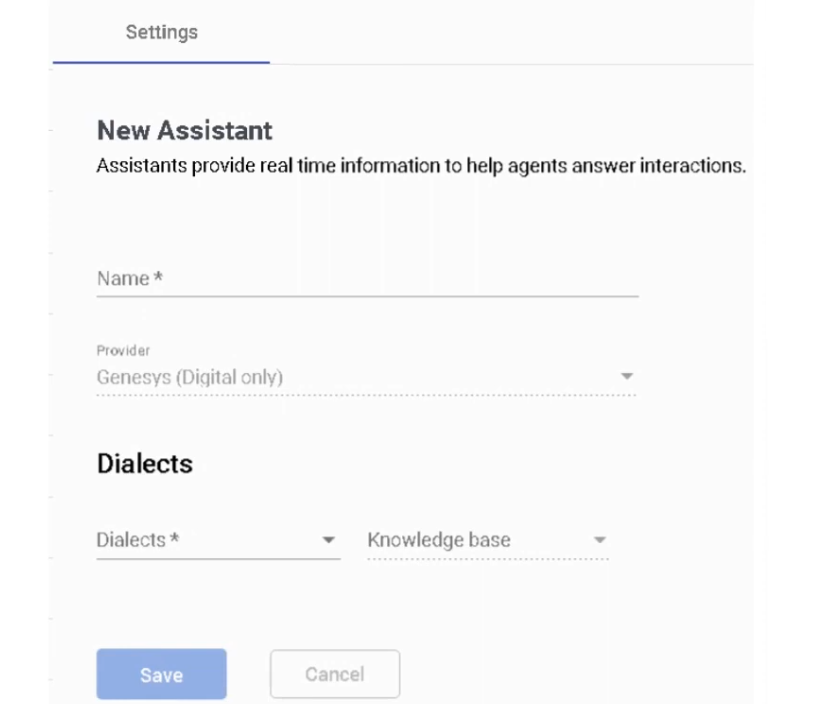
Assistant Components
| Component |
Description |
| Intents |
The goal or purpose of the customer's request (e.g., Check_Order_Status, Reset_Password) |
| Utterances |
Example phrases customers might say to express an intent — used to train the NLU model |
| Entities |
Variables extracted from customer input (e.g., order number, city, product name) |
| Slots |
Structured data fields collected during a conversation to fulfill an intent |
| Actions |
Responses or operations the assistant performs when an intent is matched |
| Knowledge Integration |
Allows the assistant to answer questions directly from knowledge base articles |
| Architect Flow Integration |
Transfers conversation control to an Architect flow for advanced routing or logic |
Configuration Settings
| Option |
Description |
| Language |
NLU processing language — determines which utterance model is used |
| Confidence Threshold |
Minimum confidence score required to trigger an intent — below this, fallback intent fires |
| Fallback Intent |
Default action when no intent is recognized (e.g., transfer to agent) |
| Disambiguation |
Prompts the customer to clarify when multiple intents closely match |
Example Assistant Flow
Customer: "I want to check my order status"
       ↓
Intent Detected: Order_Status
       ↓
Extract Entity: Order_Number
       ↓
Call API via Data Action / Architect Flow
       ↓
Return Response to Customer
       ↓
(If unresolved) Escalate to Human Agent
Best Use Scenarios
| Scenario |
Description |
| Customer Self-Service |
Resolve common issues without agent involvement |
| FAQ Automation |
Answer frequently asked questions automatically using knowledge articles |
| Order / Account Status |
Retrieve order status, balance, or appointment info via API |
| Call Routing by Intent |
Identify customer intent and route to the correct queue |
| After-Hours Support |
Provide automated assistance when agents are unavailable |
Integration Points
| Integration |
Description |
| Architect Flows |
Advanced routing or automation logic triggered by the assistant |
| Knowledge Base |
Automated responses using knowledge articles — improves containment rate |
| Digital Channels |
Chat, messaging (WhatsApp, SMS), and Web Messaging |
| Voice Channels |
Voice bots for IVR interactions — speech recognition + NLU |
| Data Actions |
API calls triggered by the assistant to retrieve or update external data |
Best Practices
| Practice |
Recommendation |
| Start with high-volume intents |
Automate the most frequent customer requests first for maximum impact |
| Keep intents simple |
Avoid overly complex intent structures that reduce NLU accuracy |
| Use knowledge articles |
Well-written articles dramatically improve bot containment rate |
| Train with real customer data |
Use actual customer utterances — not hypothetical ones |
| Monitor analytics continuously |
Review bot performance, confidence scores, and fallback rates regularly |
| Provide easy escalation |
Always ensure customers can reach a human agent quickly when needed |
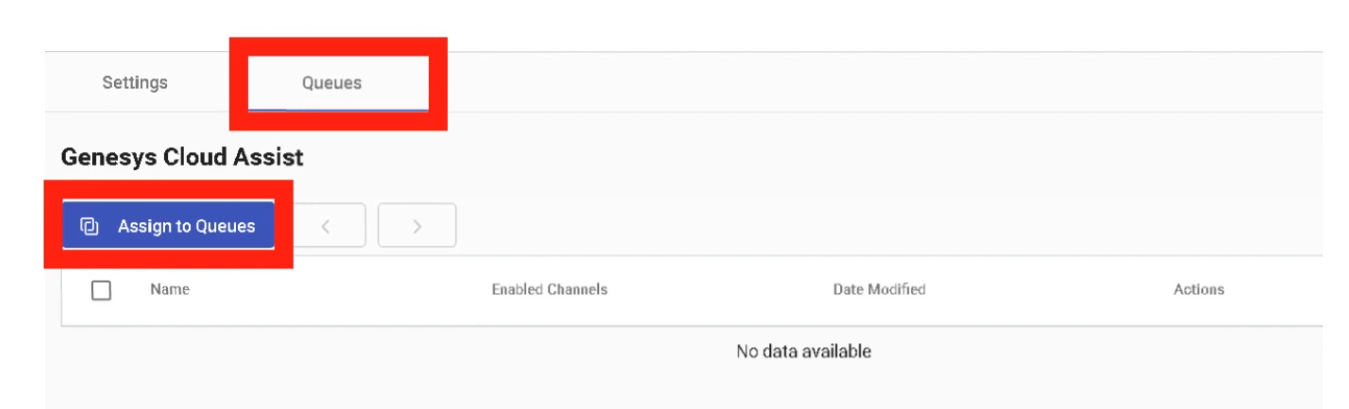
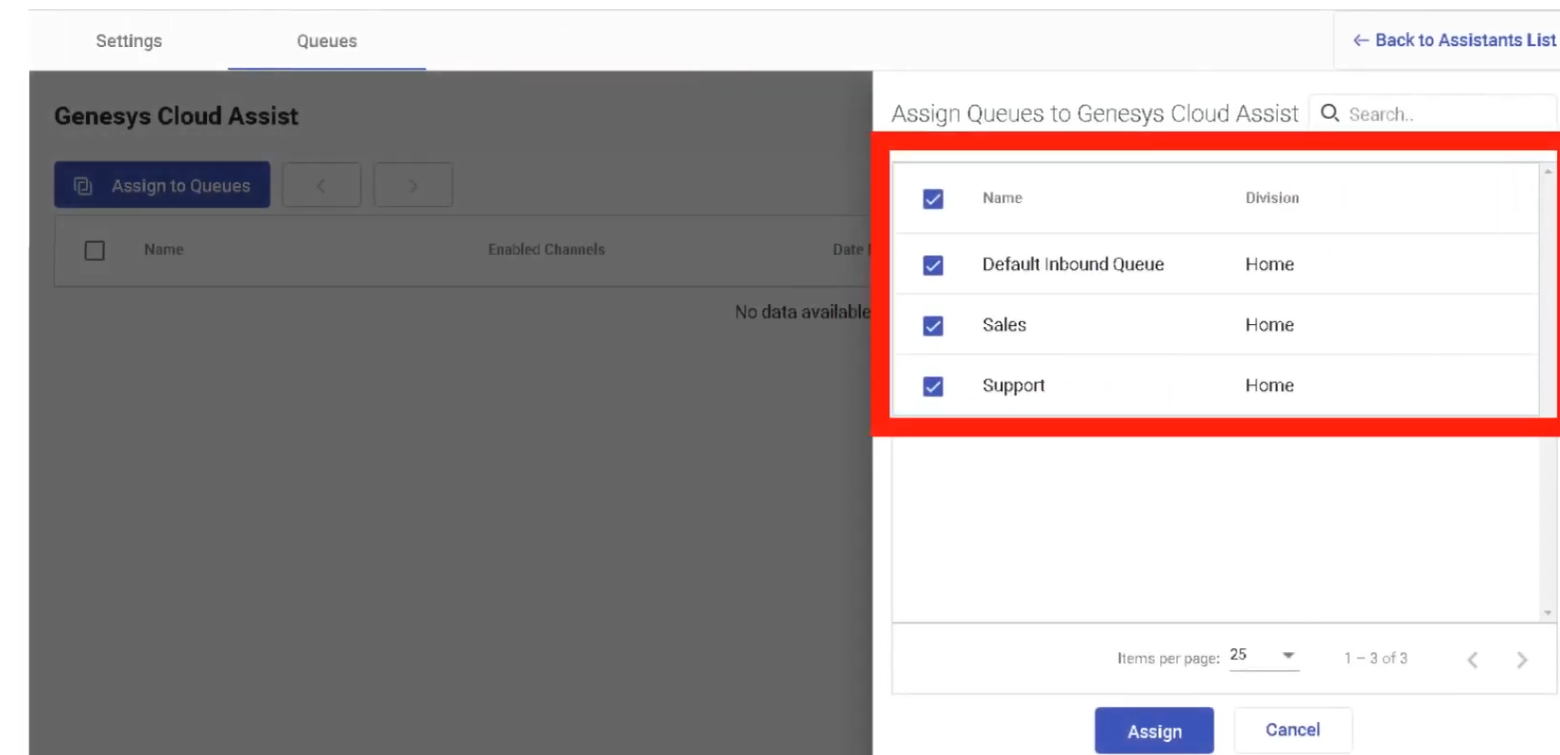
Interview Cheat Sheet
| Question |
Answer |
| What technology do Assistants use? |
Natural Language Understanding (NLU) |
| What is an Intent? |
The goal or purpose of the customer's request |
| What are Utterances used for? |
Training the NLU model with example customer phrases |
| What is an Entity? |
A variable extracted from customer input (e.g., order number) |
| What happens when confidence is below the threshold? |
The Fallback Intent fires — typically escalates to a human agent |
| What is Disambiguation? |
Prompts the customer to clarify when multiple intents closely match |

No Comments