
Genesys Cloud - How to - Schedules - Generate a schedule without forecast
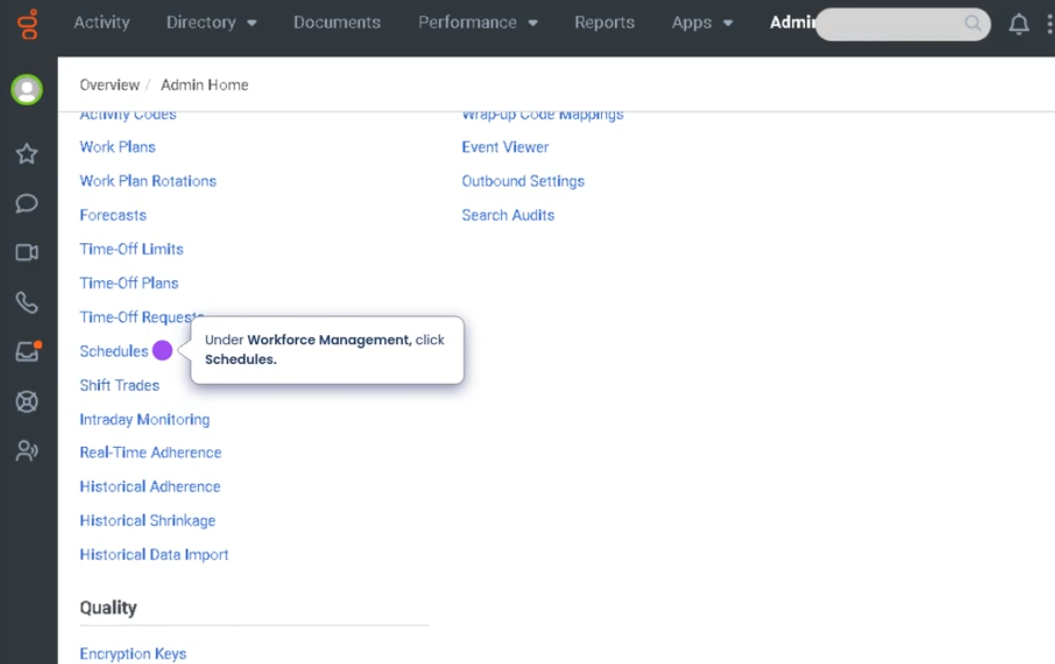
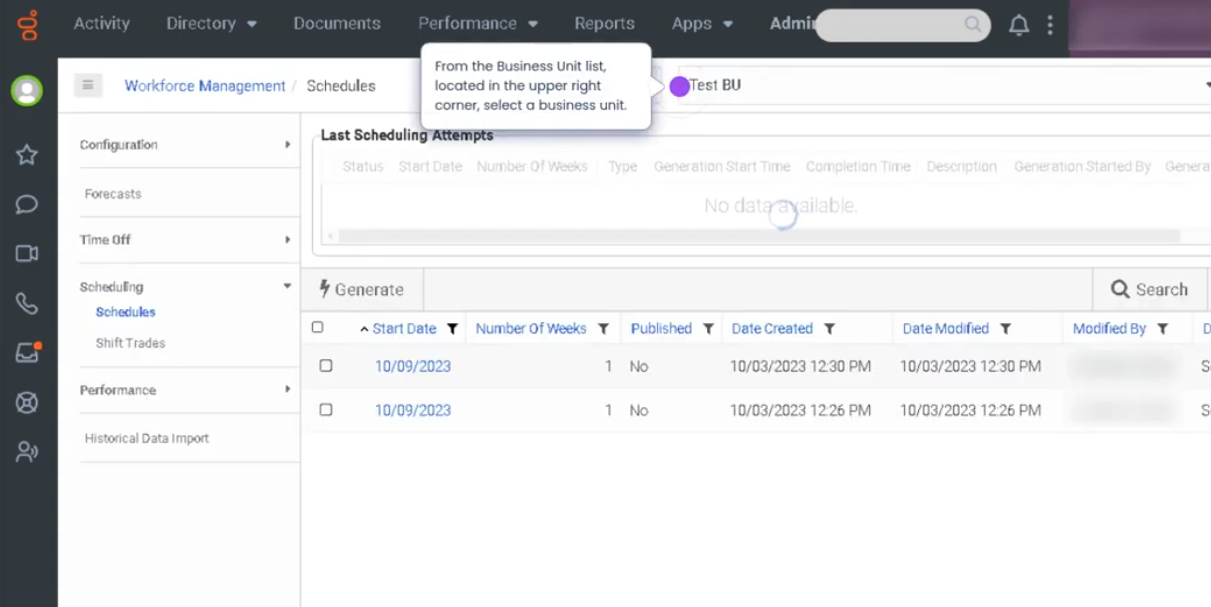
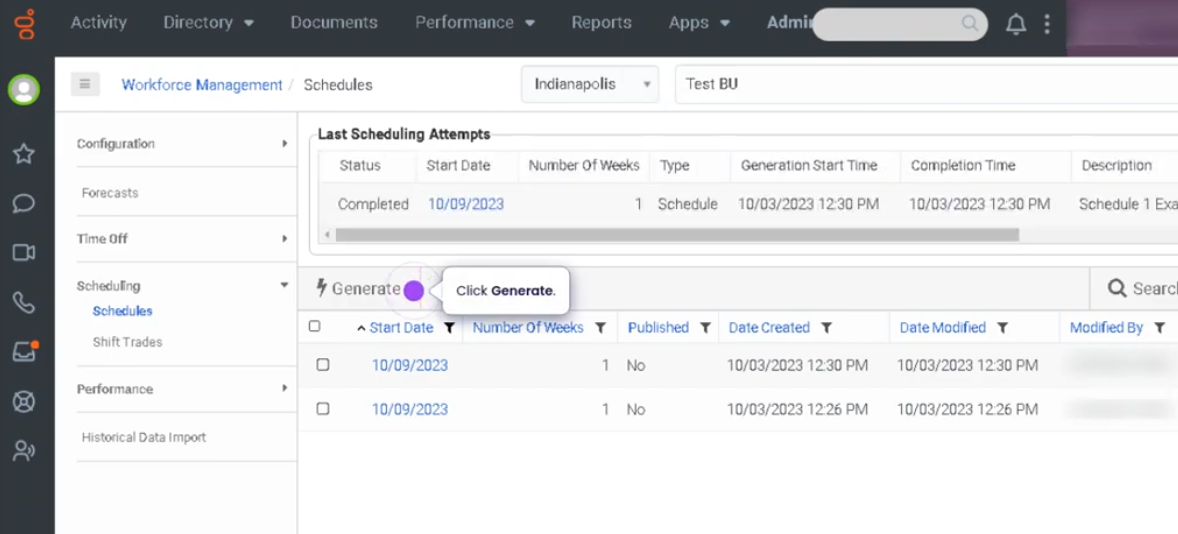
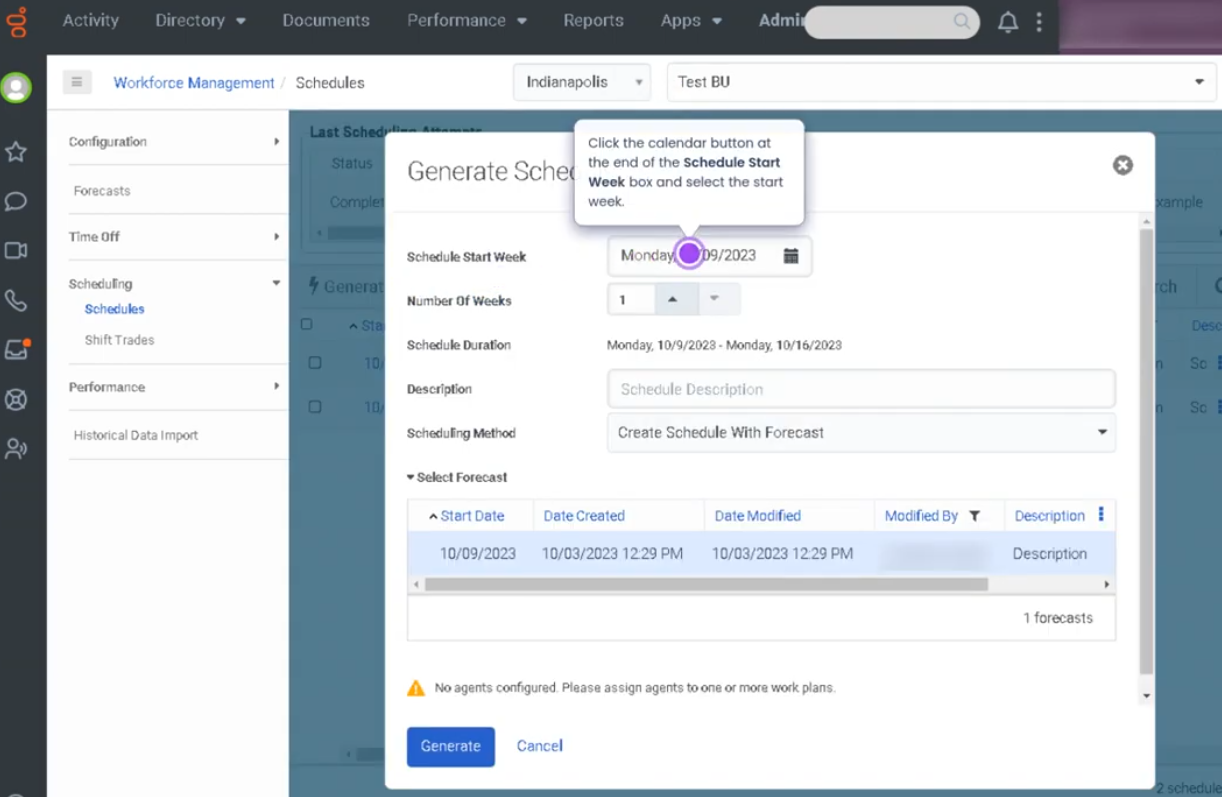
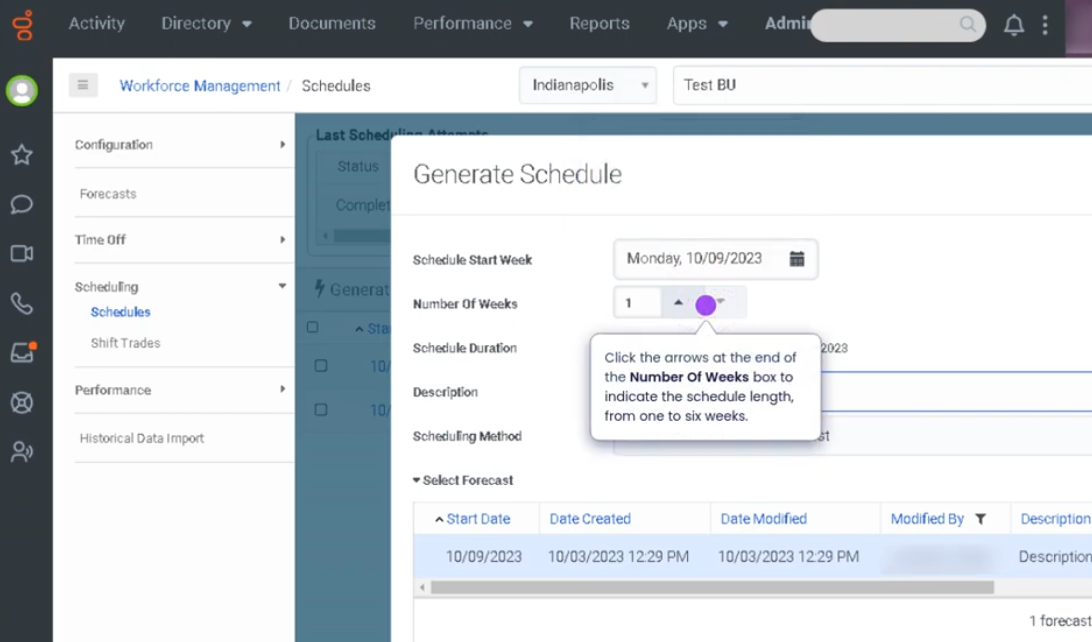
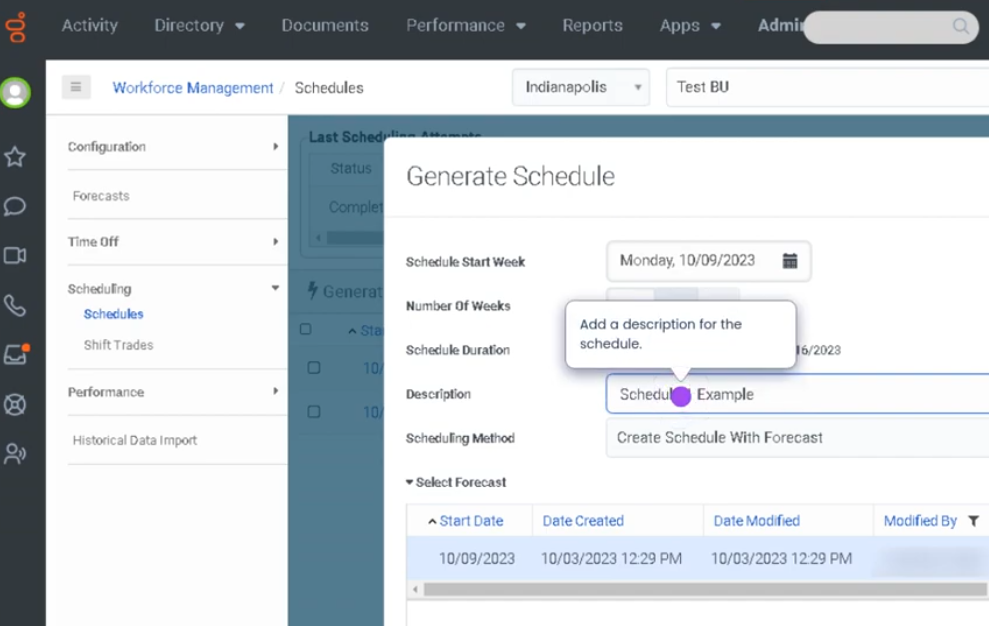
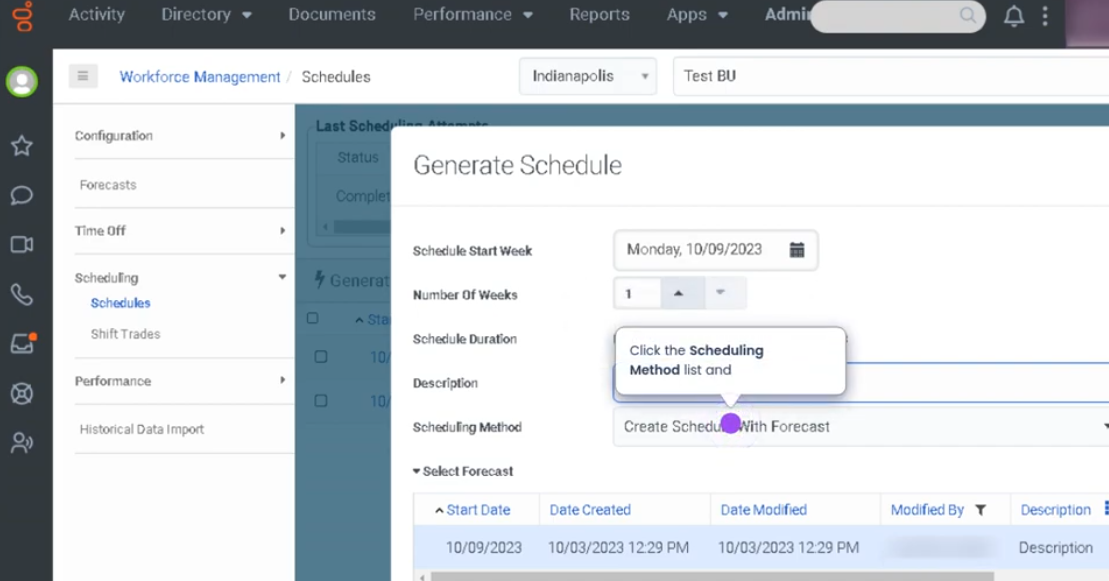
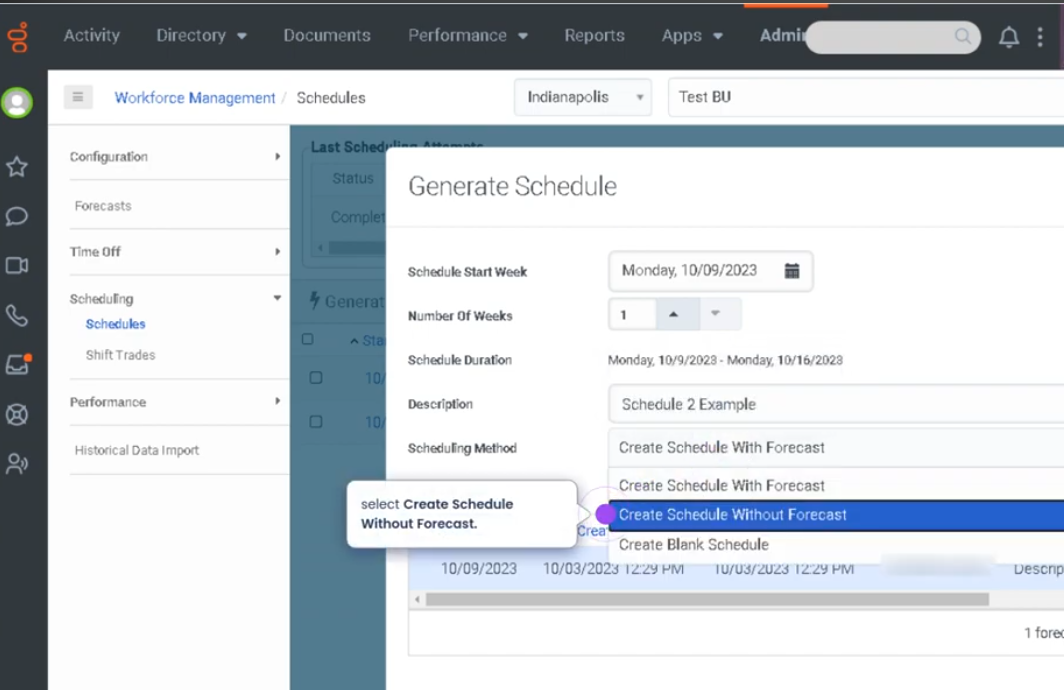
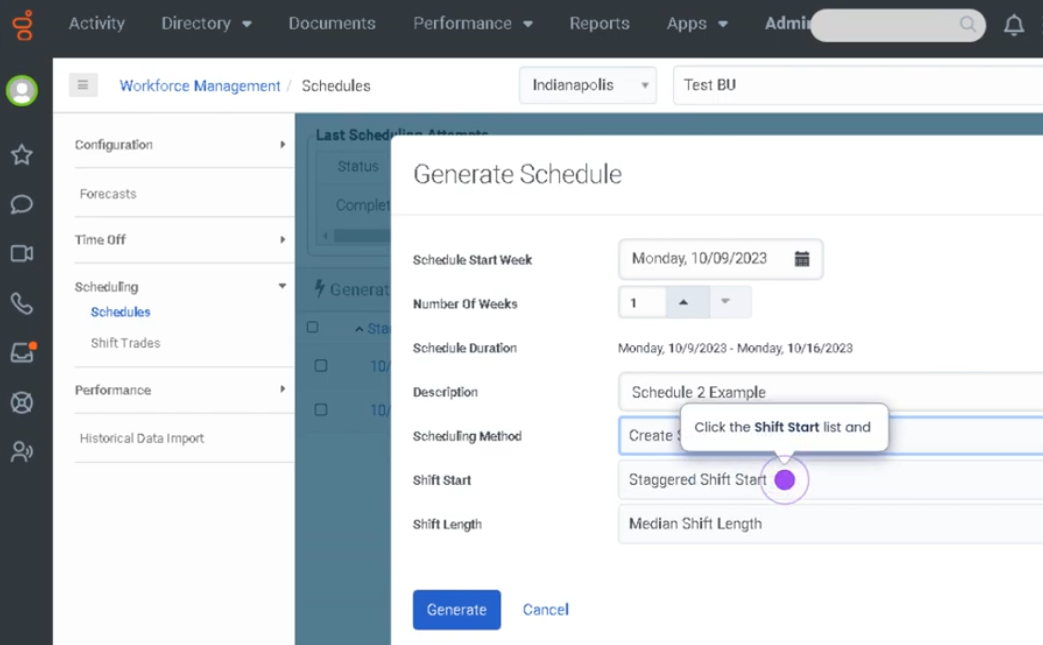
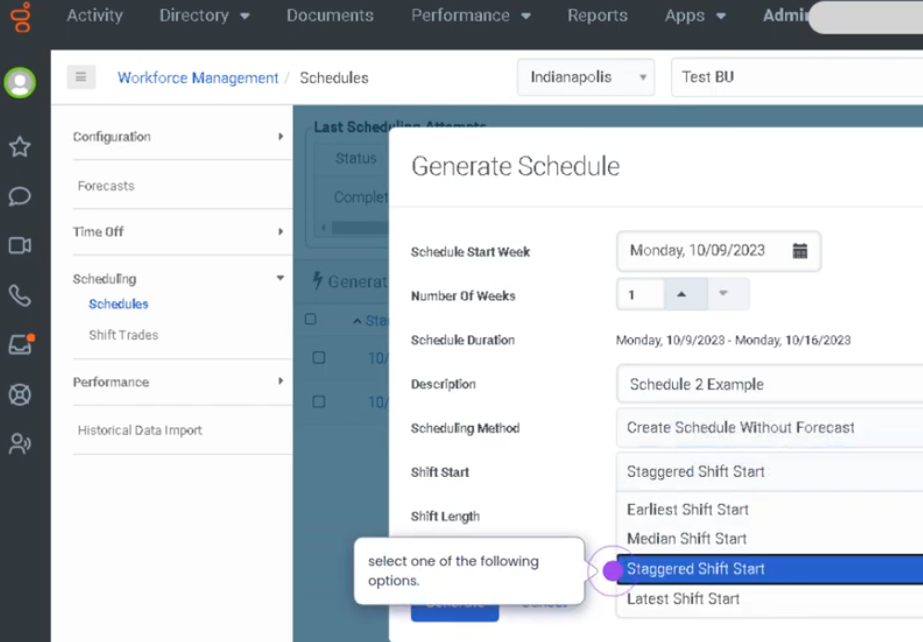
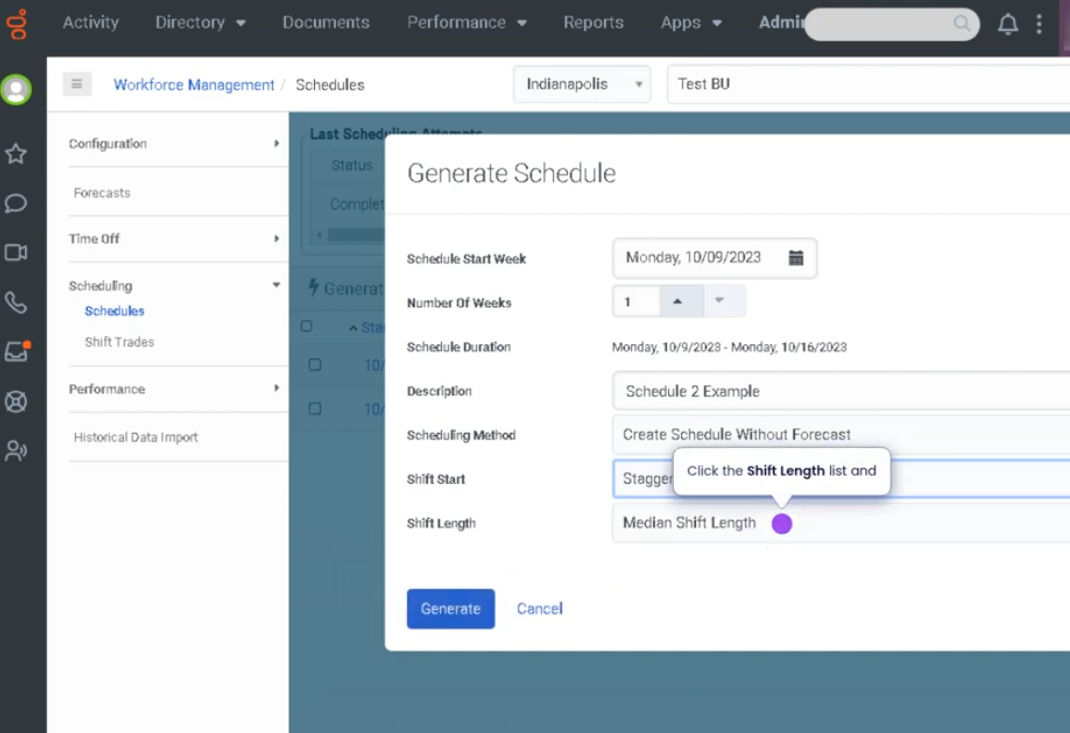
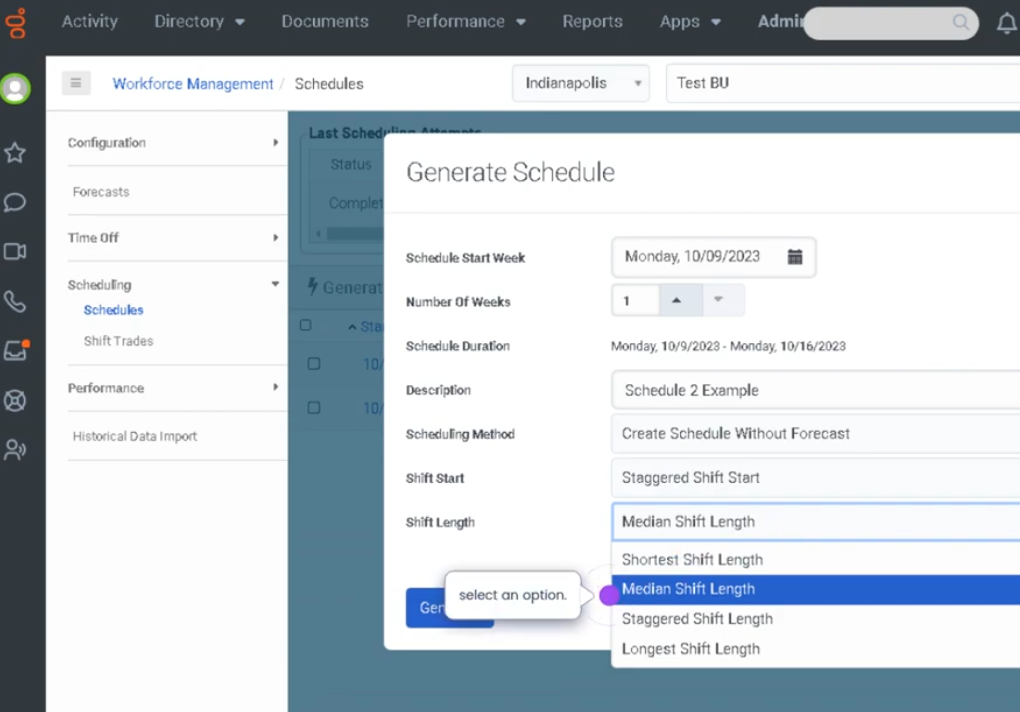
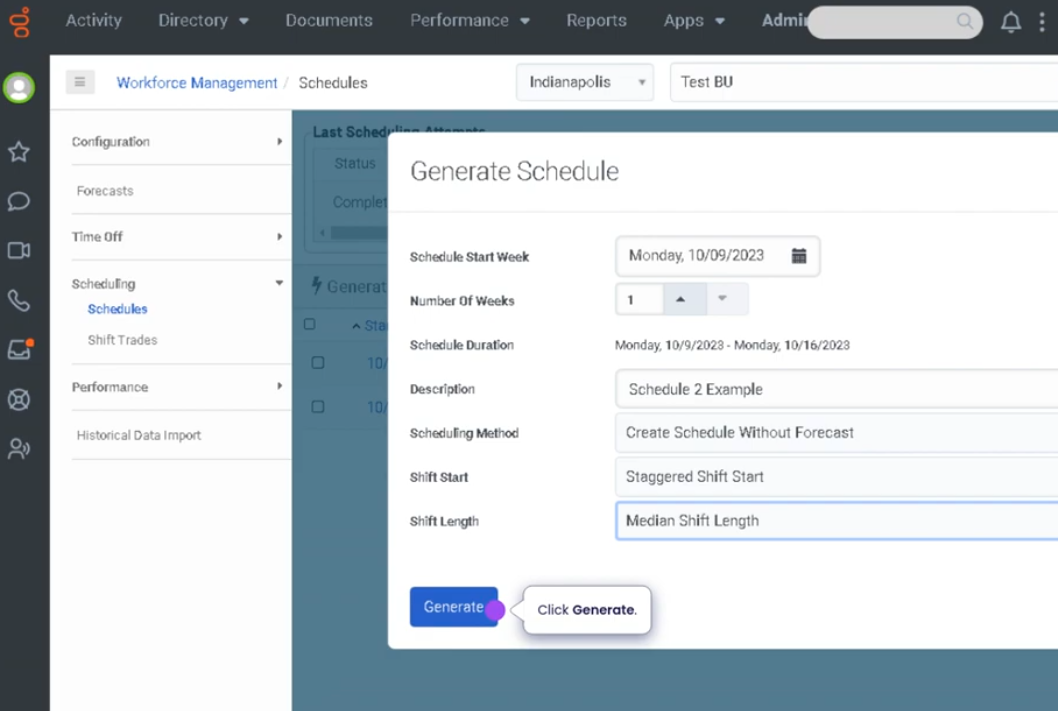
Generate a Schedule Without Forecast (Genesys Cloud Workforce Management)
Summary
In Genesys Cloud Workforce Management (WFM), administrators and supervisors can generate a work schedule without using a forecast. This method creates agent schedules based on existing staffing requirements, manual planning, or predefined staffing rules, rather than relying on predicted interaction volume.
Generating a schedule without a forecast is useful when organizations need to quickly create schedules, manage small teams, handle temporary operations, or build schedules based on fixed staffing levels rather than forecasted demand.
Utilization
| Use Case | Description |
|---|---|
| Small contact centers | Teams with stable staffing needs generate schedules manually |
| Temporary operations | Used when forecasts are unavailable or unnecessary |
| Rapid schedule creation | Supervisors create schedules quickly without forecast calculations |
| Fixed staffing models | Organizations maintain constant agent coverage regardless of demand |
| Training or onboarding periods | Scheduling agents during non-standard operational periods |
Generating schedules without a forecast allows managers to maintain workforce coverage even when demand forecasting is not required.
Best Practices
| Practice | Reason |
|---|---|
| Verify staffing requirements before generating the schedule | Ensures enough agents are assigned |
| Review agent availability and constraints | Prevents scheduling conflicts |
| Apply consistent shift templates | Helps maintain balanced work hours |
| Monitor operational metrics after scheduling | Ensures coverage aligns with workload |
| Adjust schedules manually when necessary | Maintains operational flexibility |
| Communicate schedule updates to agents | Ensures staff are aware of their assigned shifts |
Example Scenarios
Scenario 1 – Small Team Schedule Creation
Supervisor opens Workforce Management
        ↓
Supervisor selects scheduling period
        ↓
Supervisor generates schedule without forecast
        ↓
System assigns shifts based on staffing rules
Scenario 2 – Emergency Schedule Generation
Forecast data unavailable
        ↓
Supervisor generates schedule manually
        ↓
Agents assigned shifts based on availability
        ↓
Operations continue with temporary staffing plan
Scenario 3 – Fixed Coverage Model
Organization requires fixed staffing levels
        ↓
Supervisor generates schedule without forecast
        ↓
Agents assigned standard shifts
        ↓
Contact center maintains constant coverage
Key Benefits
| Benefit | Explanation |
|---|---|
| Faster schedule creation | Schedules can be generated without forecast calculations |
| Operational flexibility | Managers can manually control staffing levels |
| Useful for small teams | Forecasting may not be necessary in stable environments |
| Simplified scheduling | Reduces complexity when forecasting data is unavailable |
| Maintains workforce coverage | Ensures agents are scheduled even without demand predictions |