Administration, upgrades and maintenances
- ADS - Backup
- ADS - Migrate ADS v3.3 to v4.0 Export/Import Managed Devices
- ADS - Installing Security Service Pack
- ADS - Migrate ADS v3.3 to v4.0 migration backup
ADS - Backup
Creating a backup for any device in the network is important.
ADS has its own automatic process to create scheduled backups and upload it to a remote server.
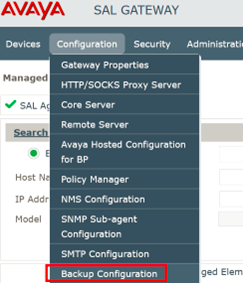
The most important part is having an SFTP server running and accessible from the ADS IP address. To implement the automatic backup of ADS expand Configuration menu then select Backup Configuration
In the next screen select Schedule Backup
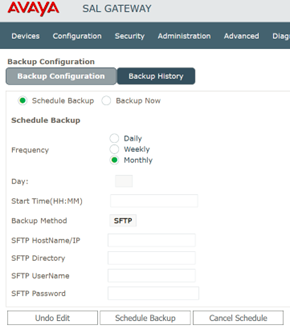
Enter the information that fill out your needs.
In the backup method select SFTP and enter the information already set up in your server.
Backup history provides information for the last backup created.
ADS - Migrate ADS v3.3 to v4.0 Export/Import Managed Devices
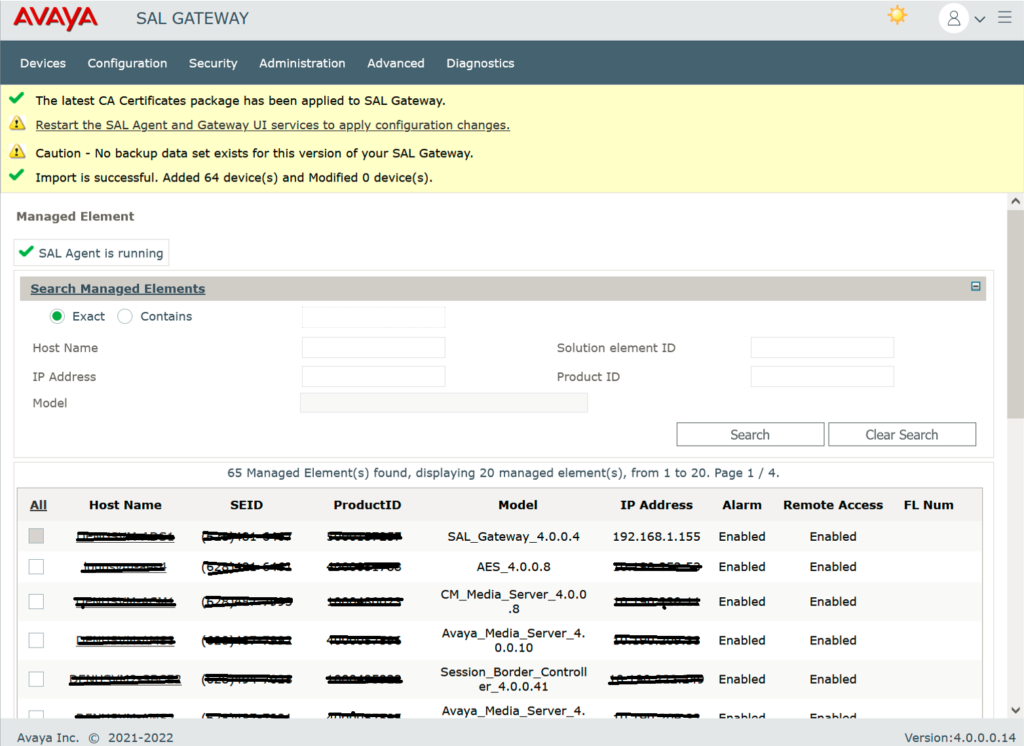
Migrate from ADS v3.3 to v4.0 can be implemented using Export/Import Managed Devices in the web portals.
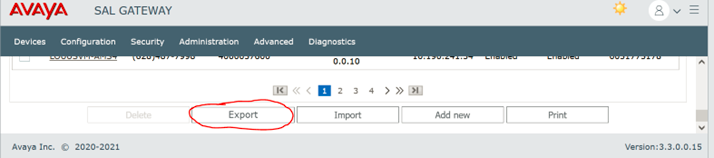
In the current ADS 3.3 use the option Export, this will create a CSV file with all the managed devices
Deploy the OVA for version 4.0 (this deploy will only install the OS required to run ADS).
Change the default password for admin (admin01) and root (root01) users in ADS OS, password will be required to change after first login.
After changing the password for root, ADS wizard runs by default, it will require default information for OS (hostname, IP, mask, gateway, DNS and timezone):
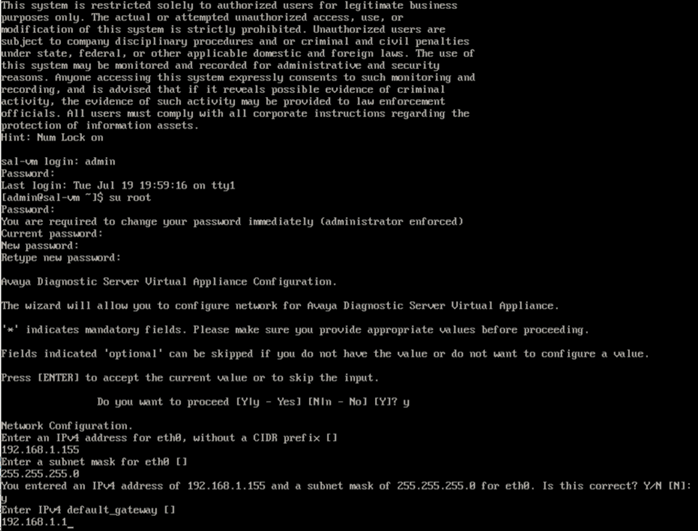
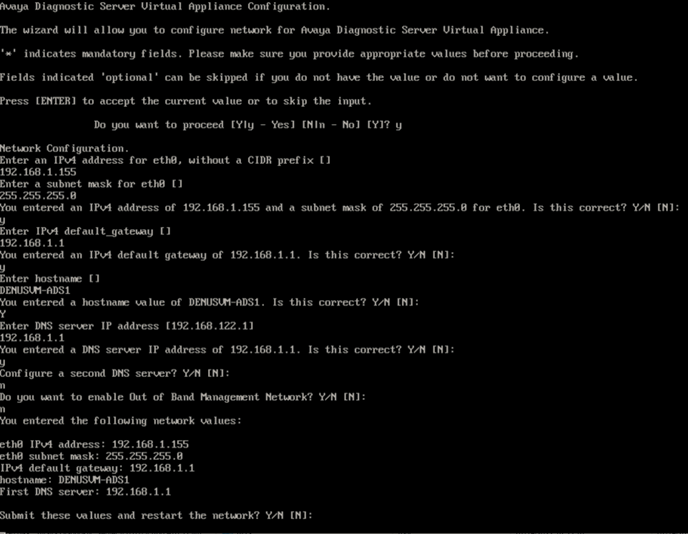
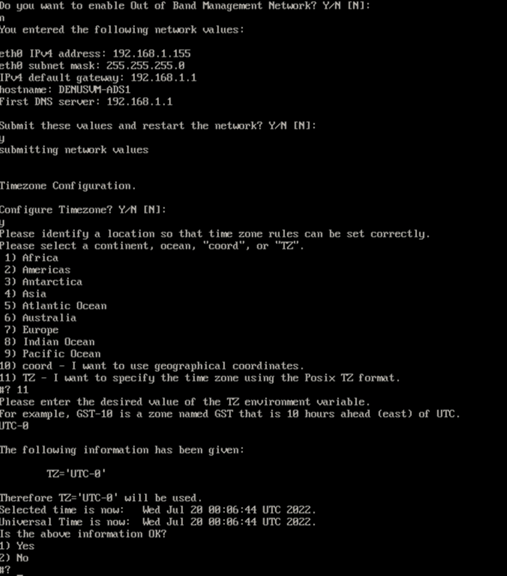
Avaya Diagnostic Server comes with software installer which is located in folder /installer
This is the GA software any updates or service packs needs to be applied after installing the GA software.
In this case only ADS 4.0 will be installed.
Move to /installer/ and extract the files to start the implementation of the ADS, issue the command:
tar -xvf ADS-Installer-4.0.0.0-843.tar.gz
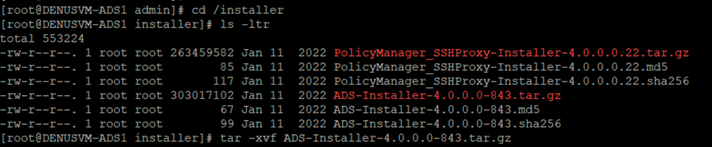
After extracting a new folder is now available in the /installer folder, issue the following command to check this new folder:
ls -ltr

Move to the new folder, use the following command:
cd ADS-Installer-4.0.0.0-843

Modify parameters on ADS_Response.properties file to perform an unattended installation (make sure SMTP parameters are included as they are mandatory to run the installation), use the following command:
./install.sh -unattended
After ADS installation is completed successfully, you should be able to access the web portal for ADS https://IP_Address:7443
This CSV file can be used to be imported in the ADS 4.0
ADS - Installing Security Service Pack
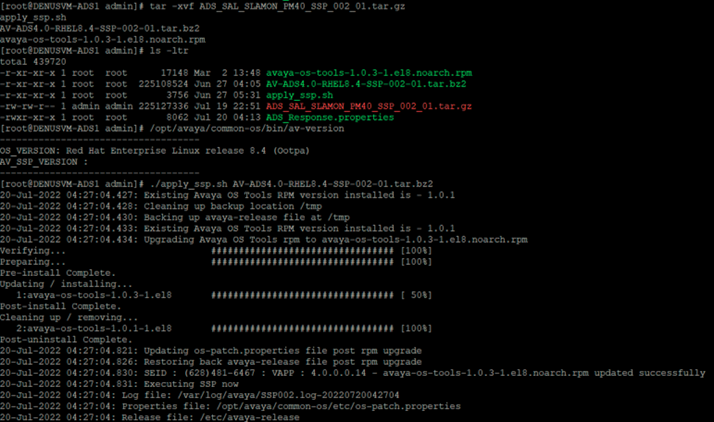
Sometimes ADS require to have patches installed, here is the procedure followed to install Avaya Diagnostic Server 4.0 Security Service Pack SSP #2, detailed instructions can be found in https://download.avaya.com/css/public/documents/101081346
- Download service pack file from Avaya and uploaded into Avaya Diagnostic Server 4.0 (in this example, file was uploaded to /home/admin folder)
- Extract the file using tar -xvf ADS_SAL_SLAMON_PM40_SSP_002_01.tar.gz
- Current SSP version can be verified using /opt/avaya/common-os/bin/av-version
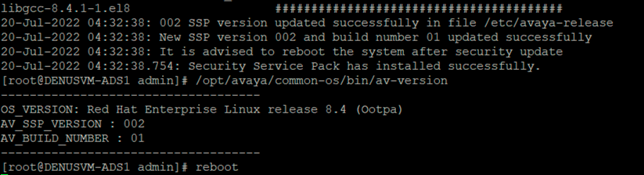
- Run the patch installer using ./apply_ssp.sh AV-ADS4.0-RHEL8.4-SSP-002-01.tar.bz2
- Verify the new SSP version /opt/avaya/common-os/bin/av-version
- Reboot
ADS - Migrate ADS v3.3 to v4.0 migration backup
In a previous entry, same upgrade was implemented using export/import devices, but we will work now performing the same upgrade but now using a migration backup in ADS v3.3 and restoring it in ADS v4.0, this is my preferred was as all settings and administration tasks (scheduled backups and other settings) are included in the migration backup.
The first step is create the migration backup in ADS v3.3 using the following commands:
mkdir /tmp/backup <- create a folder to save the backup file
cd /opt/avaya/ads/backuprestore <- move to the script folder used for the backup
./migration_backup.sh /tmp/backup <- create a migration backup file in the folder created in the first step
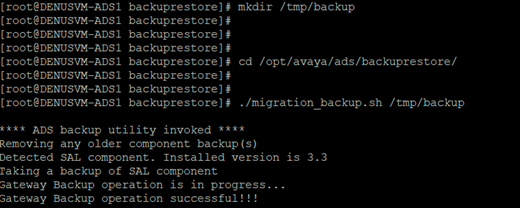
Verify the result backup file created with the following command:
ls -ltr /tmp/backup

The next step is to download the file to your PC which will be used in the next steps.
Deploy the OVA for version 4.0, it’s important to note that this deploy will only install the OS required, ADS software needs to be installed and configured.
After VM is installed try log in into the new ADS v4.0 using the default passwords.
You will be forced to change the default password for admin (admin01) and root (root01) users in ADS OS after first login.
As soon as you change the root password, ADS wizard runs by default, it will require default information for OS (hostname, IP, mask, gateway, DNS and timezone).
Make sure old ADS v3.3 is turned off before you take same the IP address to avoid duplicated IP address in your network.
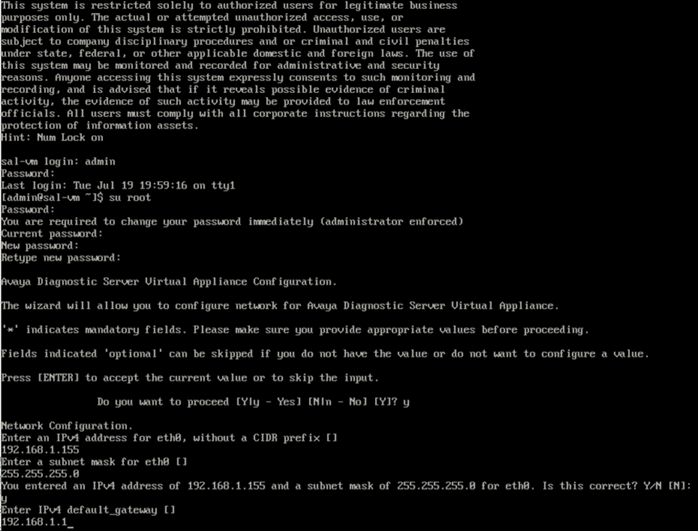
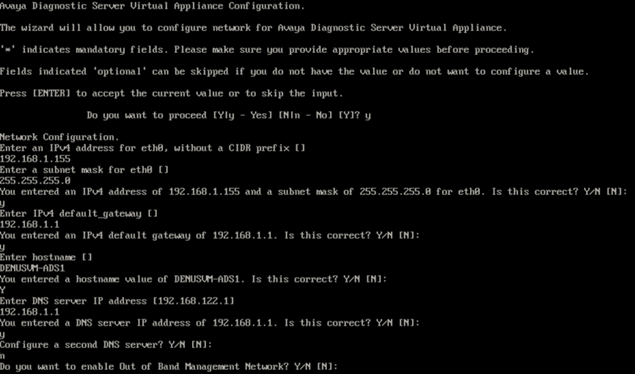
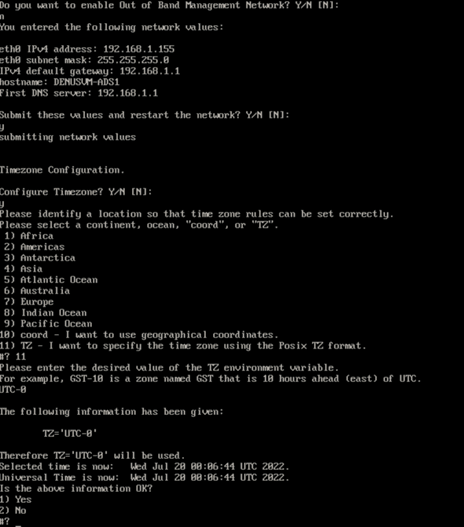
At this point ADS is now available in the network.
Upload the migration backup file created at the beginning of this document into ADS v4.0 (you can use any SFTP client like WinSCP) in this case file was uploaded in /home/admin

Avaya Diagnostic Server comes with GA software installer located in /installer, any updates or service packs needs to be applied after installing the GA software.
In this case only ADS 4.0 will be installed (no Policy Manager will be deployed).
Move to /installer/ and extract the files to start the implementation of the ADS, issue the command:
cd /installer
tar -xvf ADS-Installer-4.0.0.0-843.tar.gz
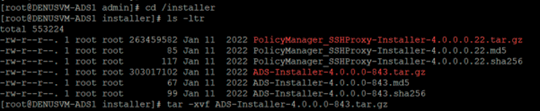
After extracting, a new folder is now available in the /installer folder, issue the following command to list the folder:
ls -ltr

Move to the new folder, use the following command:
cd ADS-Installer-4.0.0.0-843

When listing all files inside /installer/ADS-Installer-4.0.0.0-843 you will need to modify ADS_Response.properties.
This file is used to run a silent installation of ADS.
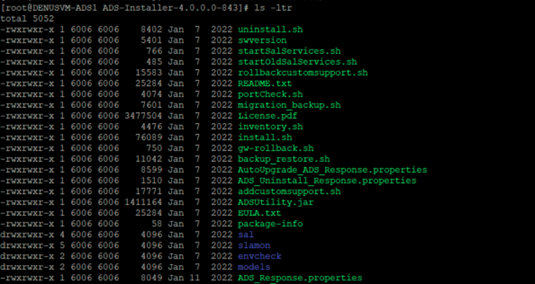
Use vi or any other text file editor you feel comfortable.
Modify ADS_Response.properties with the corresponding values
- For the ADS_AGREELICENSE property in the response file, replace the value n with y.
- For the BACKUP_FILE_PATH property, set the value as the full path of the backup file. (include the file name and extension)
- For the AGREE_ADS_COMPONENTS_CORESIDENT property, replace the value n with y, if user is installing both SAL Gateway and SLA Mon.
- For the ADS_COMPONENT_TO_INSTALL property, set the value as 3, if user is installing both SAL Gateway and SLA Mon.

After ADS installation is completed successfully, you should be able to access the web portal for ADS https://IP_Address:7443
Verify all managed devices are loaded correctly.