Administration, upgrades and maintenances
Everything related to Avaya AES Installations, upgrades and implementations
- AES – Testing SMS Service
- AES - Update Process
- AES - TSAPI CTI link integration
- AES - Upgrade 8.0.1 to 8.1.3
- AES - Renew AES Cert using System Manager
AES – Testing SMS Service
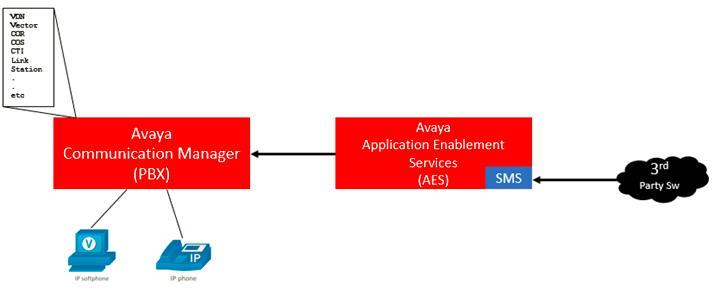
System Management Service (SMS) is an interesting service that all Application Enablement Servers run by default with no need for licensing, it exposes management features of Communication Manager. This service enables its clients to display, list, add, change and remove specific managed objects on Communication Manager.
This is a diagram representing the 3rd party software accessing the SMS web service multiple elements can be accessed via SMS but in this case we will focus in stations (ip softphones):
Basic administration needs to be set up in the AES (Communication Manager Interface -> Switch Connections) but this will not be covered in this entry.
To have SMS working properly Communication Manager IP address needs to be set up in AES SMS service (AE Services -> SMS):
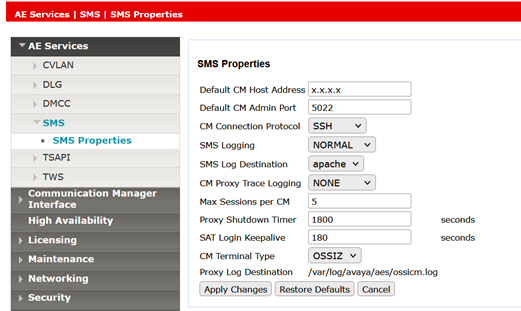
Normally, a specific user is created in Avaya Communication Manager for audit purposes, in my case SMSSrvc was created with profile 18.
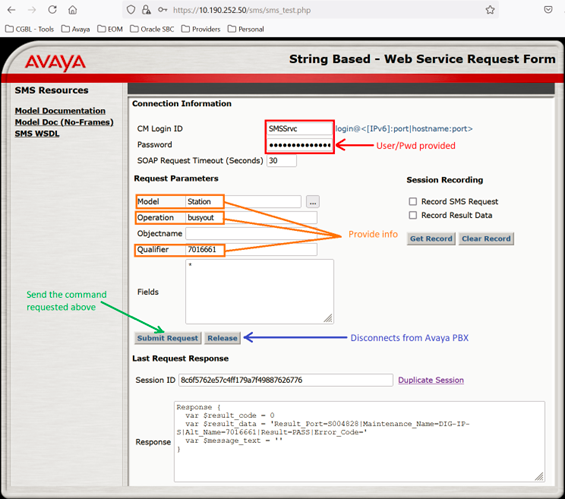
Now its time to test the SMS service, here are some steps you can follow to busyout/release an specific station (SMS Service test web page provide information & documentation for WSDL and more):
1)	Access AES SMS web page using https://AES_IP/sms/sms_test.php
2)	Fill out information to busyout:
a.	CM Login ID/Password
b.	Set Model to “Station”
c.	Operation should be set to “busyout”
d.	Set Qualifier to the extension number to be reset
3)	Press “Submit Request” Button
4)	Repeat step 2) but setting Operation to “release”
5)	Press “Submit Request” Button
6)	Press “Release” Button to disconnect session
Here is a screenshot for running the process described above:
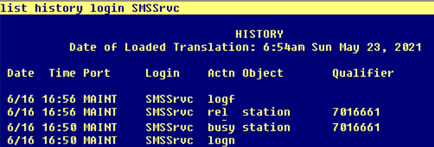
PBX commands after using the web page
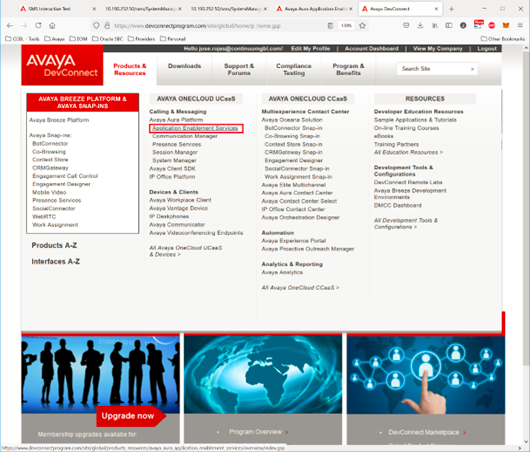
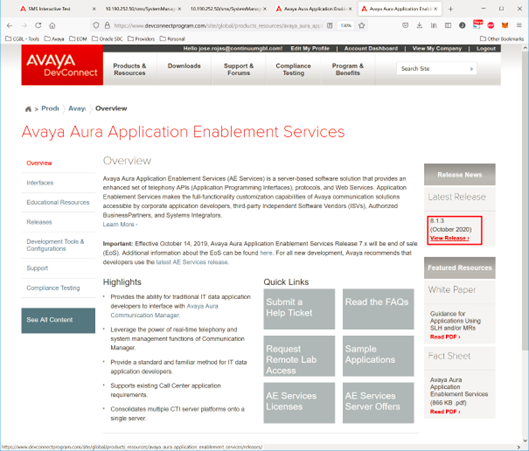
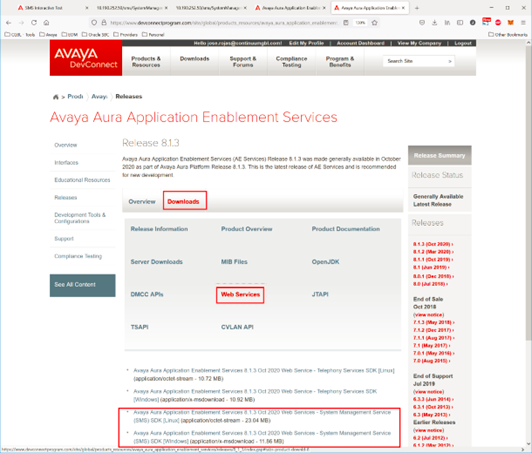
For more information visit Avaya devconnect program:
https://www.devconnectprogram.com/site/global/home/p_home.gsp
Source: https://whereismyvoicepacket.com/aes-sms/
AES - Update Process
In this entry we will document the process to apply updates in an Application Enablement Server, this what we will be applying:
812Plus_LSUPatch14.bin <- Linux Security Update Patch
aesvcs-8.1.3.4.0.2-servicepack.bin <- AES Service Pack 8.1.3.4
Here is the procedure
- Upload files to /tmp (you can use WinSCP)
- SSH the AES and move current directory to /tmp (cd /tmp)
- Verify the current version (swversion)
[root@denusvm-labaes1 cust]# swversion
***********************************************************************
Application Enablement Services
***********************************************************************
Version: 8.1.3.1.0.7-0
Server Type: OTHER
Offer Type: VIRTUAL_APPLIANCE_ON_VMWARE
RTS Version:AES-8.1.3.1.0.7-0

***********************************************************************
Operating System Version: Linux 3.10.0-1160.11.1.el7.x86_64

************* Patch Numbers Installed in this system are  *************
LSU-8.1.2Plus-4
FP8.1.3.0.0.25 (AES 8.1.3)
FP8.1.3.1.0.7 (AES 8.1.3)
***********************************************************************- Change permissions on the files uploaded
chmod 750 812Plus_LSUPatch14.bin
chmod 750 aesvcs-8.1.3.4.0.2-servicepack.bin- Execute the Linux update first (accept all terms), when done AES will restart (reconnect)
[root@denusvm-labaes1 tmp]# ./812Plus_LSUPatch14.bin- Now lets apply AES SP 8.1.3.4 (accept all terms), when done AES will restart (reconnect)
[root@denusvm-labaes1 cust]# ./aesvcs-8.1.3.4.0.2-servicepack.bin- Verify the new version after patches installed (swversion)
[root@denusvm-labaes1 tmp]# swversion
***********************************************************************
Application Enablement Services
***********************************************************************
Version: 8.1.3.4.0.2-0
Server Type: OTHER
Offer Type: VIRTUAL_APPLIANCE_ON_VMWARE
RTS Version:AES-8.1.3.4.0.2-0

***********************************************************************
Operating System Version: Linux 3.10.0-1160.53.1.el7.x86_64
************* Patch Numbers Installed in this system are  *************
LSU-8.1.2Plus-4
FP8.1.3.0.0.25 (AES 8.1.3)
FP8.1.3.1.0.7 (AES 8.1.3)
LSU-8.1.2Plus-14
FP8.1.3.4.0.2 (AES 8.1.3)
AES - TSAPI CTI link integration
In this entry let’s work in integrating an Application Enablement Server to a Communication Manager and create TSAPI CTI link that we will be testing in the next entry. We will assume that the CM and AES servers are already deployed, connectivity is in place and the administrator have the credentials/permissions to perform changes/additions.
Let’s begin with change ip-services Set up in the first page enabling AESVCS running on port 8765 on Communication Manager:

On the third page set up the hostname of the AE Server and password:

Second step is adding the CTI link with add cti 1:



Now it’s time to make the changes in the AE Server:
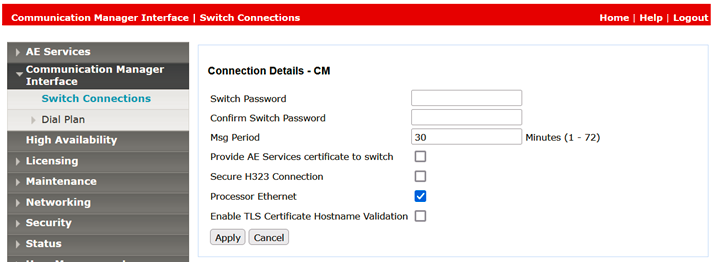
First, log in into the AES using the web portal and navigate to Communication Manager Interface -> Switch Connections -> Add Connection:

In the next screen type the same password set in the change ip-services command in the PBX, enable only the Processor Ethernet option, leave all other settings by default blank, but make sure the TLS is disabled.
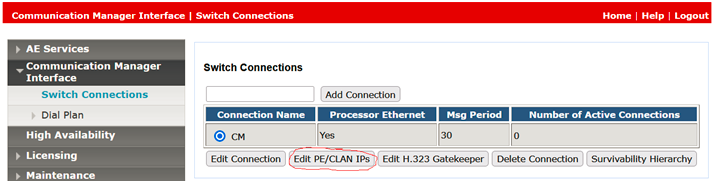
Once the new connection appears, select the connection, and select Edit PE/CLAN IPs:
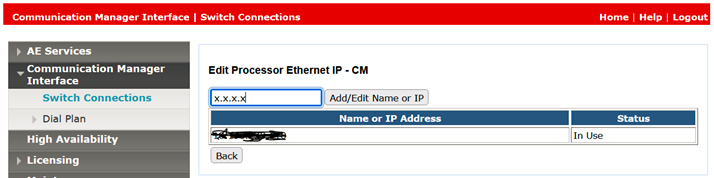
Type the IP address for the Processor Ethernet and click on Add/Edit Name or IP:
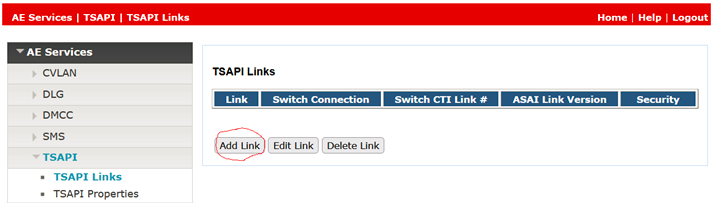
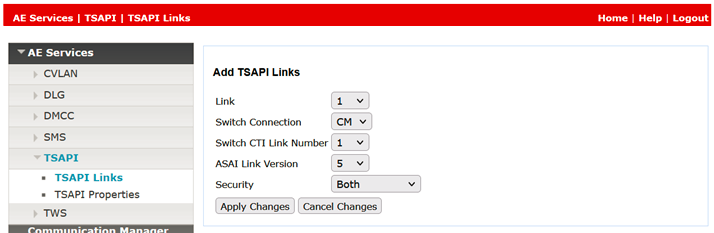
In the next screen assign a Link number, select the switch connection created and make sure you select the correct Switch CTI Link Number created in the PBX using the add cti x, in my case it is the cti link 1, on security you can select to have the TLINK encrypted, unencrypted or having both enabled.
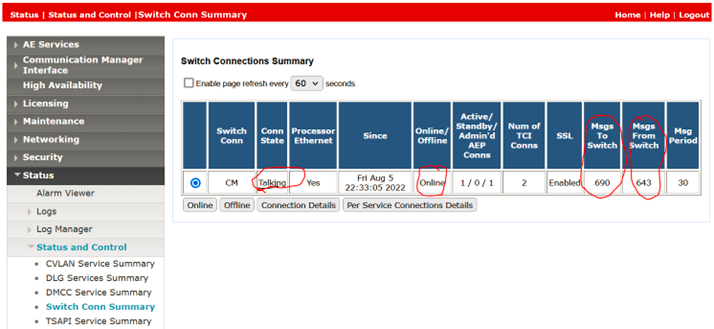
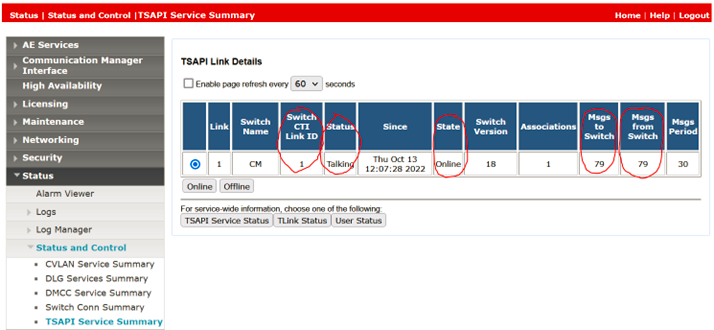
Lets complete this entry verifying the status of the CM Connection and the TSAPI CTI link:
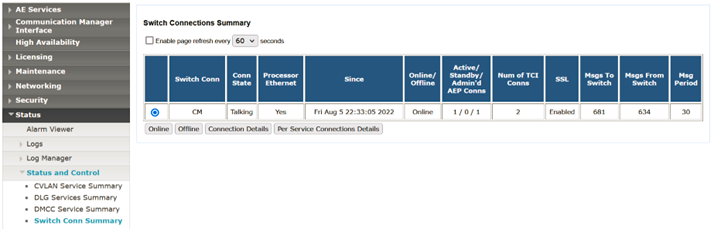
Status -> Status and Control -> Switch Conn Summary
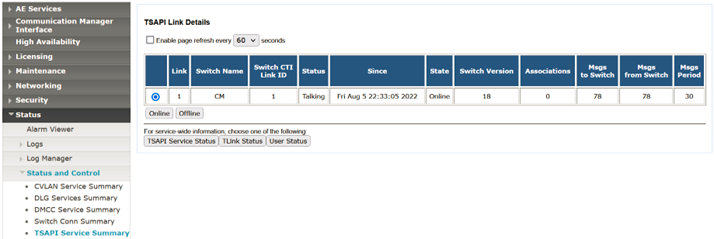
Status -> Status and Control -> TSAPI Service Summary
Source: https://whereismyvoicepacket.com/avaya-aes-admin-task-aes-tsapi-cti-link-integration/
AES - Upgrade 8.0.1 to 8.1.3
In this entry we will focus in upgrading an AES version 8.1.2 to 8.1.3, to accomplish this we will fist deploy a new VM with OVA 8.1.3 file version and we will connect it into the network using a temporary IP address, allowing us to perform preparation task and have the VM ready just for the cut over maintenance window.
In order to simplify the information presented and the simplicity of the OVA deploy, it will be omitted, the most important part in this step is setting up the network connection using a temporary IP address, this can be completed within the wizard or using the command (using the proper permissions):
/opt/mvap/bin/netconfig
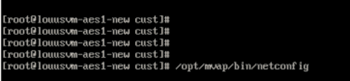
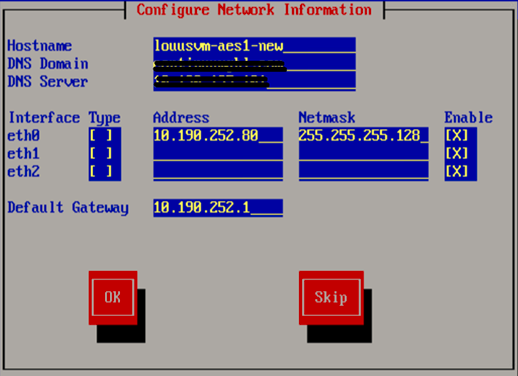
We will use the previous command later in this entry.
Here is the process to follow:
- Apply the service pack/feature pack/Linux Security Update (refer to the entry Avaya AES – Admin task – Update process in case of any doubt)
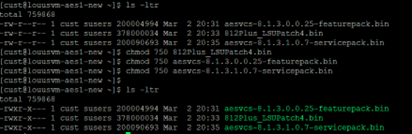
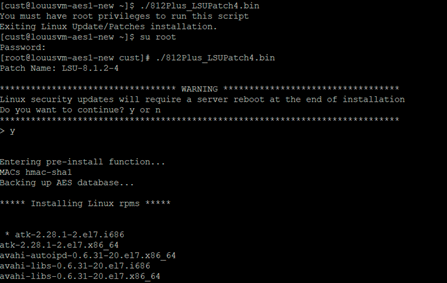


2. Keep track of the current configuration Backup configuration (Screenshoots)
AE Services
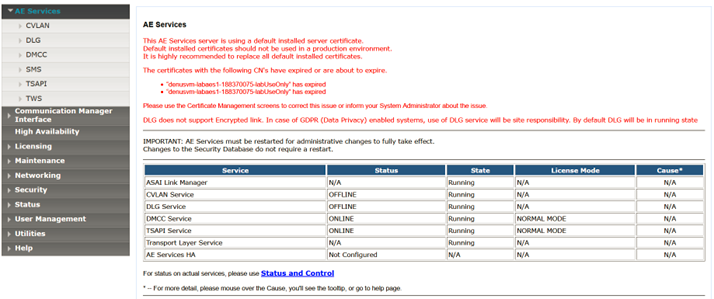
AES Services -> CVLAN -> CVLAN Links

AES Services -> TSAPI -> TSAPI Links
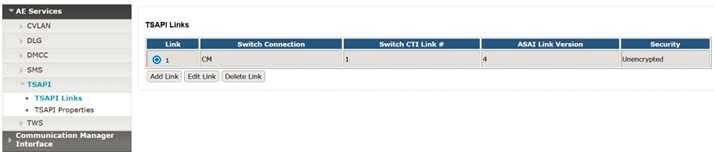
Communication Manager Interface -> Switch Connections

Communication Manager Interface -> Switch Connections -> Edit Connection
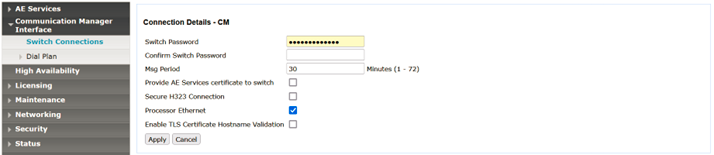
Communication Manager Interface -> Switch Connections -> Edit PE/CLAN IPs

Communication Manager Interface -> Switch Connections -> Survivability Hierarchy

Maintenance -> Date Time/NTP Server

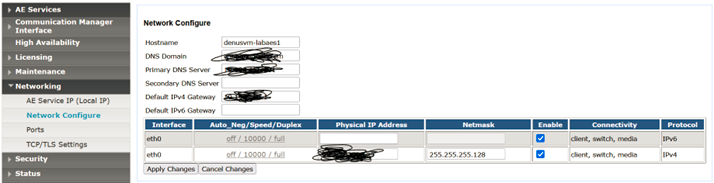
Networking -> Network Configure
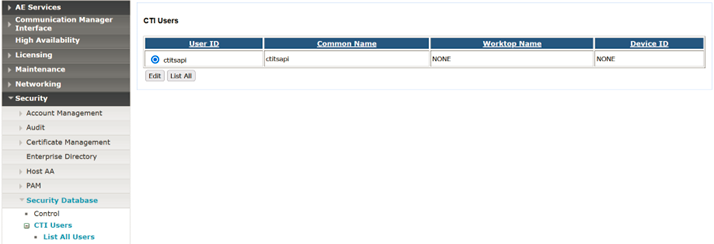
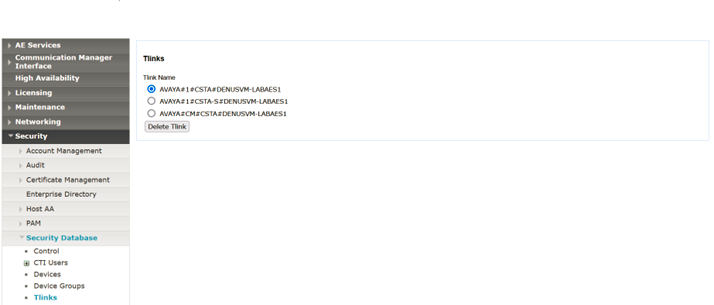
Security -> Security Database -> Tlinks
Status -> Switch Conn Summary
Status -> TSAPI Service Summary
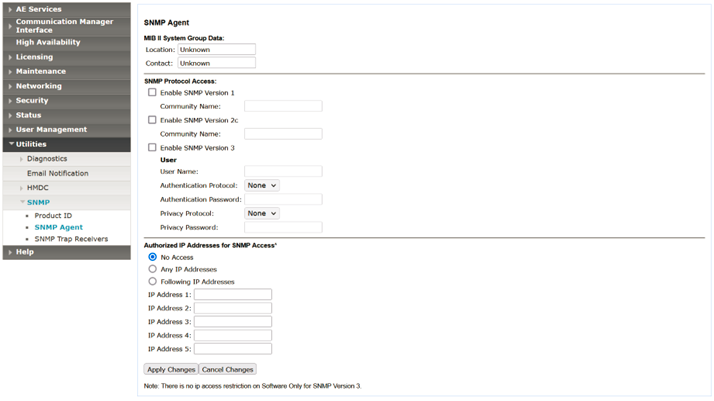
Utilities -> SNMP -> SNMP Agent
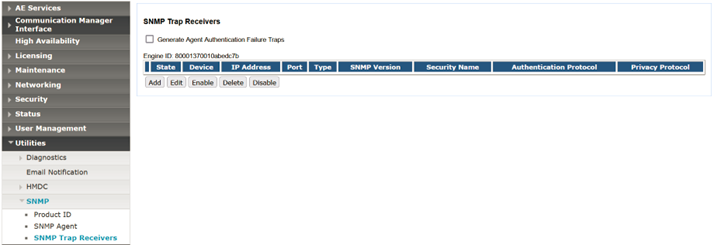
Utilities -> SNMP -> SNMP Trap Receivers
3. Maintenance window
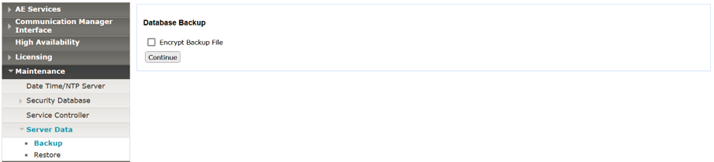
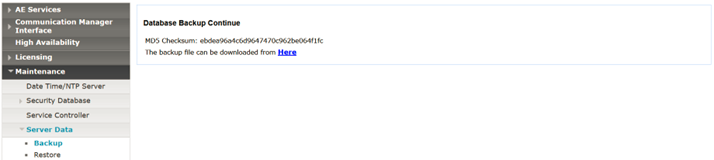
Create a backup file Maintenance -> Server Data -> Backup and download
Shutdown production server
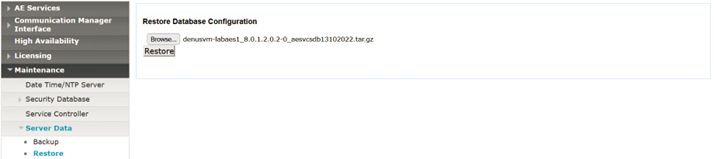
Restore backups
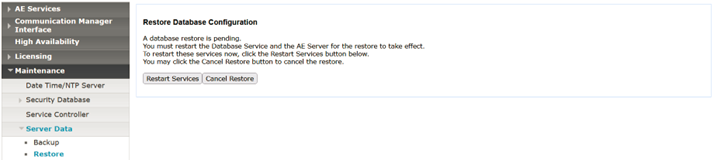
Last step is verifying all services and validate everything is up and running correctly to start testing applications. This concludes this entry.
Source: https://whereismyvoicepacket.com/aes-upgrade/
AES - Renew AES Cert using System Manager
AES certificate renewal if using SMGR certificate with CA Certificate and End Entity in place.
*This work will need a maintenance window for restarts of the AES.
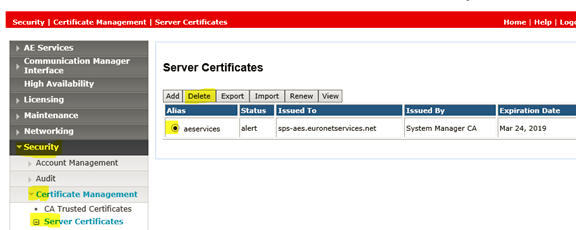
1. Remove Certificate that is about to expire from AES.
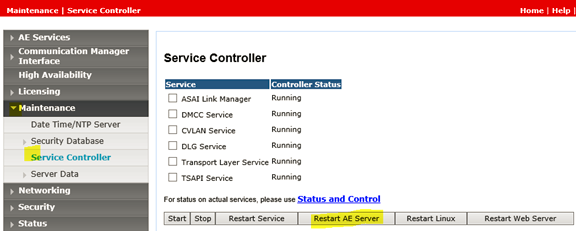
2. Restart AE Server
3. Go to the System Manager> Security> Certificates> Authority> Search End Entities
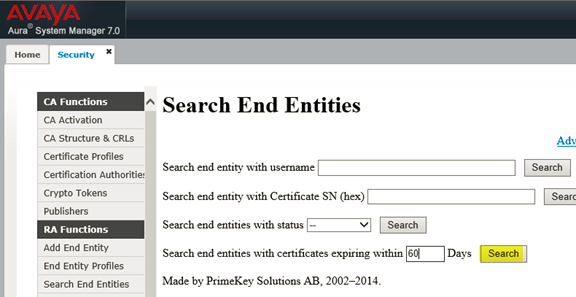
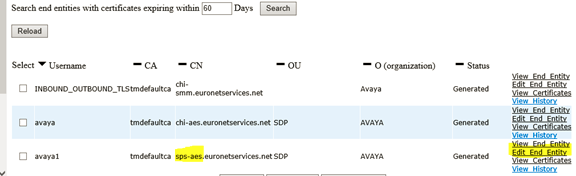
4. Verify the certificate for your AES by the CN and select Edity End Entity
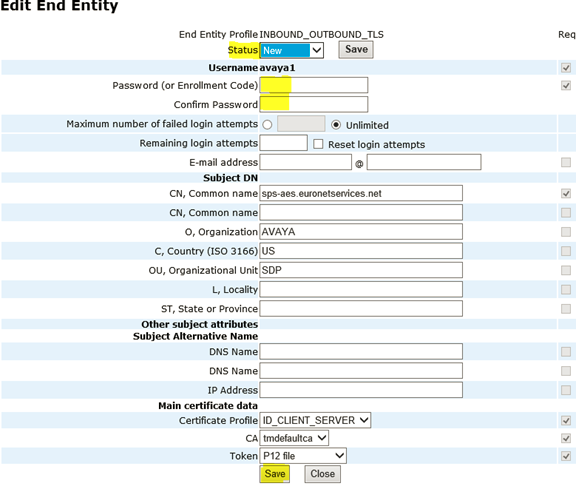
5. Change the status to New, enter the passwords and then Save
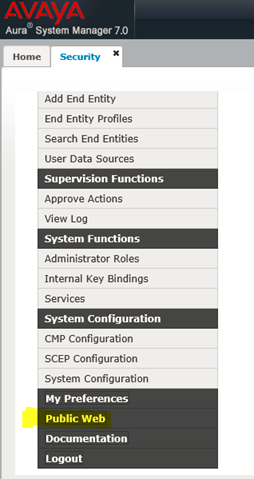
6. Scroll to the bottom of the page and select Public Web.
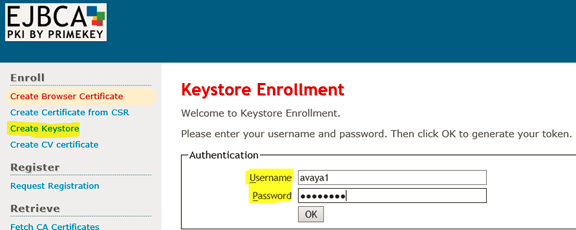
7. Select Create Keystore and then enter the username and password from the End Entity and select OK.
8. Select 2048 bits and then Select Enroll.

Once you click enroll the certificate will be downloaded (depending on your browser you can select where it is saved or find it in downloads from windows explorer.
Next Import the new AE Services server certificate into the AES
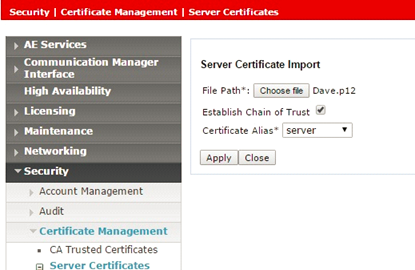
1. Using the AE Services Management Console navigate to "Security > Certificate Management > Server Certificates"
2. Click on the Import button and upload the new AE Services server certificate you created above (this will be the .p12 file). Select an alias (server) from the drop down menu
3. Click the "Apply" button.

4. Select Choose file, Establish Chain of Trust and Certificate Alias.
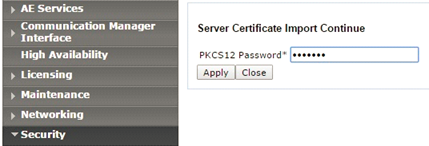
5. Enter the PKCS12 password (from the End Entity) and select Apply and then on the next page Apply again.
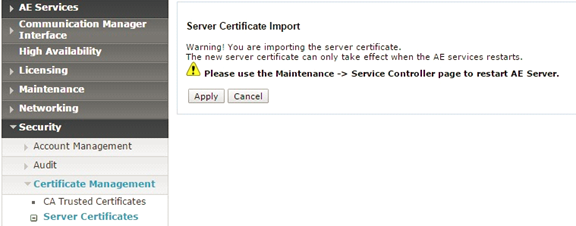
6. Restart the Linux server.